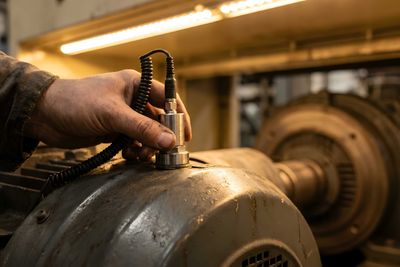
Many reliability professionals have encountered a frustrating situation. A vibration alarm appears on a critical machine, maintenance personnel begin investigating a potential fault, and days later the machine is found to be healthy. The elevated readings were caused not by equipment degradation but by changing operating conditions. The data was correct. The diagnosis was not.
Predictive Maintenance Has More Data Than Ever
For decades, reliability professionals have worked toward a common goal: collecting more information about asset health.
Organizations have invested heavily in vibration monitoring systems, infrared thermography, oil analysis equipment, motor current signature analysis, online condition monitoring platforms, and increasingly sophisticated Industrial Internet of Things (IIoT) technologies.
Today, many facilities can collect more asset data in a single day than they could gather in an entire year only a few decades ago. Yet despite this unprecedented visibility, unexpected failures still occur. False alarms continue to consume maintenance resources. Equipment is sometimes repaired unnecessarily, while genuine problems occasionally go unnoticed until they become serious.
This raises an important question. “Is the problem really a lack of data?”
In many cases, the answer is no.
The challenge is no longer collecting measurements. The challenge is understanding what those measurements mean. In many organizations, diagnostic accuracy is becoming a greater limitation than data availability.
The Same Measurement Can Mean Different Things
One of the fundamental realities of industrial equipment is that machines do not operate in isolation. Their behavior is strongly influenced by operating conditions.
A vibration level considered acceptable under full-load operation may indicate a developing problem when the same machine is operating under light-load conditions.
Similarly, an operating temperature of 85°C may be perfectly normal during periods of peak production demand. The identical temperature during low-demand operation could signal a cooling problem, lubrication issue, or abnormal loading condition.
Motor current analysis presents similar challenges. Changes in current signatures may result from rotor defects, eccentricity, or mechanical faults. However, they may also reflect changes in process conditions, load fluctuations, or operating modes that have nothing to do with asset degradation.
In each of these examples, the measurement itself is not misleading. The problem arises when the measurement is interpreted without understanding the circumstances under which it was collected.
Context determines meaning. Without context, reliability professionals risk comparing measurements that are not truly comparable.
This disconnect between asset condition data, and operating conditions can be described as the Context Gap. The larger the gap, the greater the risk of misinterpretation, false alarms, and incorrect maintenance decisions. In many organizations, reducing the Context Gap may deliver greater reliability improvements than deploying additional sensors or monitoring technologies. Closing the Context Gap is becoming one of the most important challenges in modern predictive maintenance programs.

Why Context Often Disappears
If context is so important, why is it frequently absent from predictive maintenance workflows?
One reason is that industrial data often exists in separate systems.
Condition monitoring platforms may contain vibration, temperature, and lubrication data. Meanwhile, operational information such as load, speed, throughput, process state, and production demand may reside within SCADA systems, historians, or manufacturing execution systems.
As a result, analysts often evaluate asset health data independently from the operational environment that produced it.
Another challenge is what might be called "snapshot thinking."
Many diagnostic decisions are based on individual measurements or short-term trends. Analysts naturally focus on the numbers that triggered alarms, while broader operating conditions receive less attention.
Unfortunately, machines rarely care about organizational data boundaries.
Equipment responds to the combined influence of mechanical, electrical, thermal, and operational factors. Separating these influences may simplify data management, but it can complicate diagnosis.
Finally, many organizations still rely heavily on threshold-based alarm strategies.
Thresholds are valuable tools, but they have limitations. A static alarm limit does not understand whether the machine is operating at 20% load or 100% load. It does not recognize seasonal temperature variations, production changes, or different operating modes.
Thresholds identify deviations. They do not explain them.
Moving Toward Context-Aware Diagnostics
The next evolution of predictive maintenance will likely focus less on collecting additional data and more on integrating existing information more effectively.
This requires a shift toward context-aware diagnostics.
Rather than evaluating asset condition alone, reliability teams should seek to understand asset condition within its operational environment.
This means combining traditional condition indicators such as vibration, temperature, oil analysis results, and electrical signatures with operational variables including load, speed, duty cycle, production state, startup frequency, and process conditions.
Environmental influences should also be considered. Ambient temperature, humidity, cooling effectiveness, seasonal variations, and even operator practices can significantly affect machine behavior.
When these factors are analyzed together, diagnostics become substantially more meaningful.
A vibration increase can be evaluated relative to actual operating load. Temperature changes can be interpreted within the context of ambient conditions. Electrical signatures can be assessed against process demand rather than in isolation.
The objective is not simply to determine whether a measurement has changed. The objective is to understand why it has changed.
That distinction is critical.
The Future of Predictive Maintenance Is Better Interpretation
The reliability industry often discusses the future in terms of artificial intelligence, digital twins, advanced analytics, and autonomous monitoring systems.
These technologies undoubtedly offer tremendous potential.
Future predictive maintenance systems will increasingly rely on digital twins, machine learning, and advanced analytics to support decision-making. These technologies do not eliminate the need for context. In many ways, they make context even more important because the quality of any prediction ultimately depends on the quality and completeness of the information used to generate it.
Ultimately, their effectiveness depends on one fundamental principle: context.
Even the most sophisticated analytics platform can produce misleading conclusions if critical operational information is missing. Conversely, a reliability engineer equipped with modest tools, but strong contextual understanding can often make remarkably accurate decisions.
Predictive maintenance does not fail because sensors are inaccurate. It often fails because data is interpreted without sufficient awareness of the conditions that produced it.
As organizations continue their digital transformation journeys, the goal should not simply be more sensors, more dashboards, or more alarms.
The goal should be better interpretation.
Without context, predictive maintenance risks becoming predictive confusion.
With context, the same measurements can become actionable reliability intelligence.
Machines do not generate data in isolation. They generate data within a context. The future of predictive maintenance belongs to organizations that learn to interpret both.