Field service is often discussed as a scheduling or workforce-productivity challenge. Organizations invest in mobile applications, dispatch engines, route optimization and digital work orders expecting that faster coordination will automatically produce better outcomes.
Those capabilities matter, but they solve only part of the problem. In asset-intensive industries, field service is where maintenance strategy meets physical reality. It is where asset condition, work priority, technician capability, safety requirements, spare-parts availability, operating constraints and engineering knowledge must come together.
A technician can reach the right location without the right part. A work order can be completed without capturing useful failure evidence. A high-risk asset can be delayed because criticality is invisible to the dispatcher. An AI recommendation can sound convincing while being based on incomplete history.
My starting point is therefore simple: do not treat field service transformation as a dispatch-improvement program. Treat it as a reliability decision system.
The question is not, “How can we send technicians to jobs faster?” It is, “How do we ensure that the right work is identified, prepared, prioritized, executed and converted into trusted asset evidence?” That shift changes the operating model, the data architecture, the technology conversation and the role of AI.
1. Field Service Is the Operational Edge of Asset Management
For a maintenance or reliability organization, a work order is not merely a task. It is the operational expression of an asset-management decision.
Behind every field intervention are practical questions:
- Does the asset actually require attention?
- What is the operational, safety or customer consequence of delaying the work?
- Is the job sufficiently planned to be executable?
- Are the required skills, permits, parts and tools available?
- Can the work be performed safely under the current operating conditions?
- Did the intervention resolve the problem?
- What did the organization learn about the asset, failure mode or maintenance strategy?
These decisions rarely live in one application. They draw from Enterprise Asset Management, Field Service Management, Asset Performance Management, inventory, workforce, spatial, engineering and customer systems. The technician therefore operates at the intersection of several business processes. The quality of field execution depends on how well those processes connect.
A modern mobile experience can improve the technician journey. It cannot compensate for a weak job plan, an unreliable asset hierarchy, an unavailable critical spare or unclear decision ownership. Reliability of field execution begins long before the technician receives the assignment.
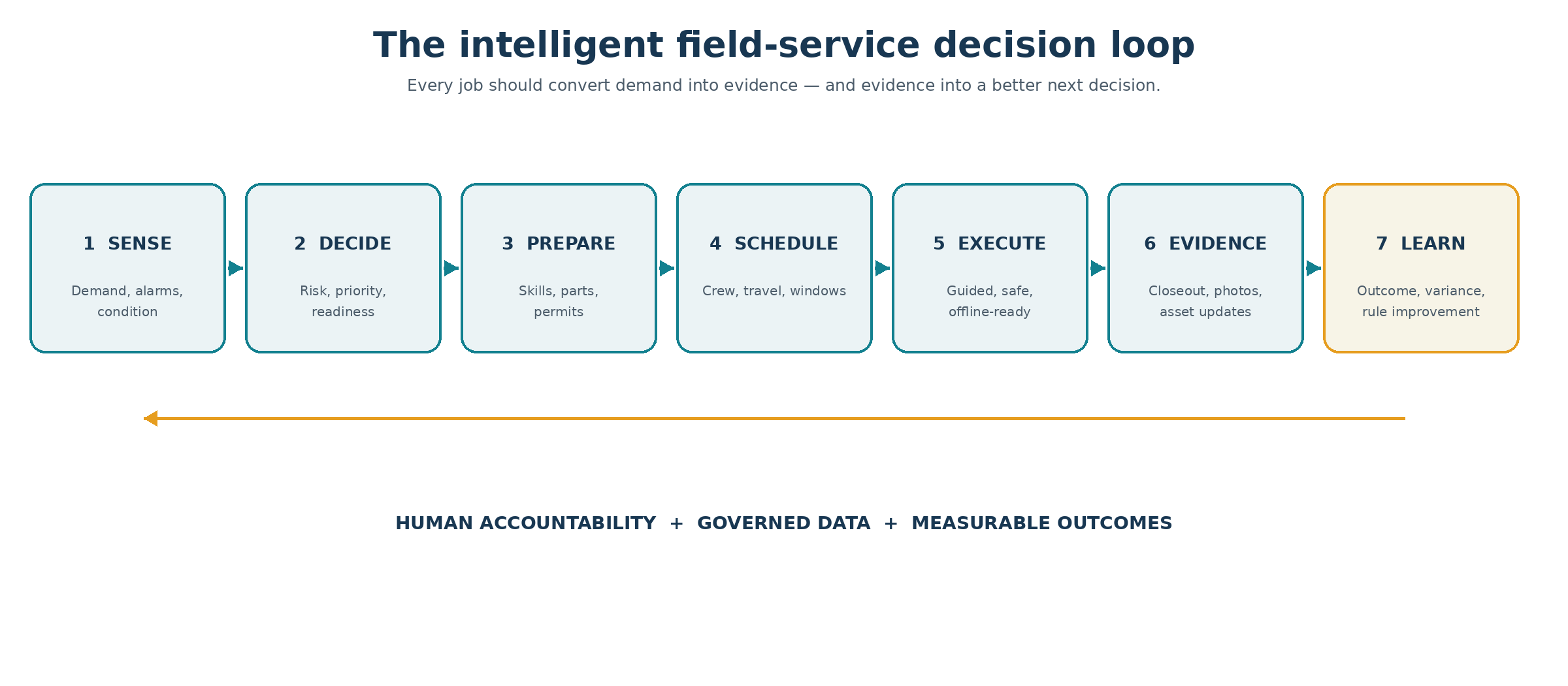
Figure 1. Four operating-model anchors for field-service transformation.
2. Start with the Operating Model, Not the Technology
Many transformation programs begin by comparing product capabilities: scheduling, mobility, copilots, route optimization, inventory and reporting. In my view, that is usually too early.
The first question should be: what is the operating-model anchor?
Asset-lifecycle led
Appropriate when reliability, maintenance, inspections, safety and critical assets are central. Field execution stays closely connected to asset history, work management, materials, maintenance strategy and reliability performance.
Customer-service led
Appropriate when appointments, service-level commitments, customer communication and case resolution drive the field operation.
ERP led
A natural choice when financial control, procurement, supply-chain processes and enterprise standardization are the dominant priorities.
Workflow-platform led
Useful when field work must be orchestrated across customer service, operations, IT, HR and other enterprise functions.
None of these models is universally better. The right answer depends on where the organization creates value and which operational records need to remain authoritative.
A practical leadership test: If the field-service platform became unavailable tomorrow, which capability would be most affected: customer service, asset reliability, enterprise workflow or ERP execution? The answer often reveals the right anchor.
3. Connect the Complete Field-Service Decision Loop
A future-ready field-service process should create a closed loop from operational demand to reliable asset evidence. I use seven connected stages:
1. Sense
Identify what requires attention using work requests, alarms, inspections, condition information, preventive-maintenance plans and operational observations. AI can classify requests, detect duplicates, summarize information and identify unusual patterns. The business must still validate urgency, asset identity and safety relevance.
2. Decide
Determine what should happen first. Priority should reflect asset criticality, failure consequence, safety exposure, regulatory requirements, outage impact, customer commitments and operational risk. AI can support prioritization, but rules and exceptions must remain owned by accountable business and reliability leaders.
3. Prepare
Confirm that the job is executable. A ready work package should contain the correct asset, scope, job plan, procedures, parts, tools, permits, skills, access requirements and safety controls. AI can identify missing prerequisites or assemble a preliminary package; the planner remains accountable for quality.
4. Schedule
Assign the right person or crew at the right time. A practical schedule considers skills, qualifications, material availability, travel, operating windows, permits, priority, location and customer commitments, not technician availability alone.
5. Execute
Give the technician trusted information at the point of work: asset history, drawings, previous failures, job steps, safety requirements, location information and approved troubleshooting knowledge. Where connectivity is unreliable, offline capability is an operational requirement, not a nice-to-have.
6. Evidence
Capture what actually happened: readings, labor, materials, failure information, observations, photographs, configuration changes and follow-up requirements. AI may help structure field notes or flag incomplete data, but critical asset records should not change without appropriate review.
7. Learn
Compare intended and actual outcomes. Did the repair eliminate the failure? Was repeat work required? Was the maintenance strategy effective? Did the work package contain the right information? Were parts available? This is where field execution becomes reliability learning.
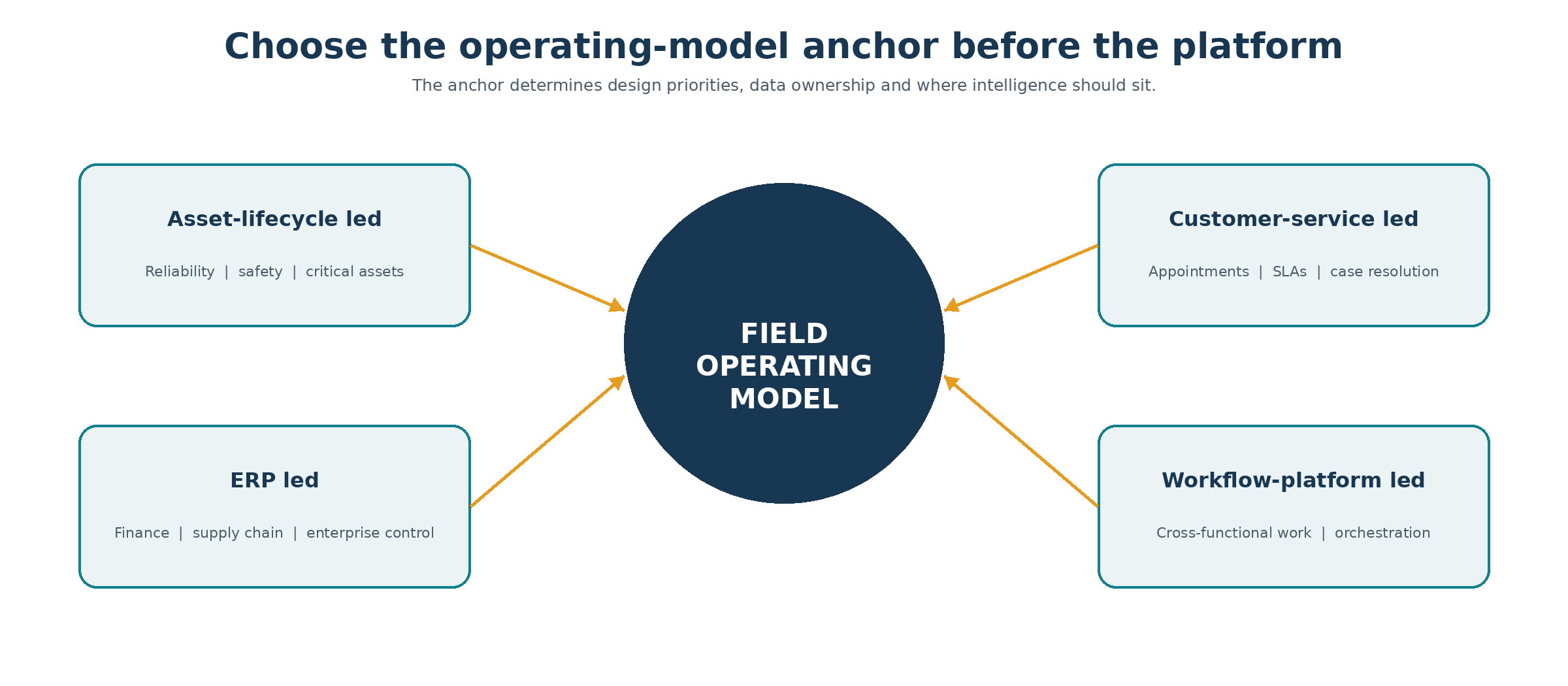
Figure 2. The intelligent field-service decision loop, with evidence and learning feeding the next decision.
4. AI Should Improve Decisions, Not Simply Generate Text
Much of the current field-service AI conversation focuses on copilots: helping technicians find information, summarize history or complete documentation. These are useful applications, but they are only the starting point.
The real value appears when AI improves a defined operational decision:
- Identify missing prerequisites before work is released.
- Rank work using asset risk and service consequence.
- Recommend viable crew and scheduling scenarios.
- Find relevant asset history or approved procedures.
- Support image-based inspection.
- Structure technician notes and failure information.
- Detect differences between planned and actual outcomes.
- Route defined exceptions to the accountable person.
For every AI use case, I would define five things before discussing the model:
- The decision being supported.
- The evidence required.
- The limits of the recommendation.
- The person accountable for approval or action.
- The outcome used to determine whether the decision was effective.
This matters more than whether the technology is called a copilot, agent or optimization engine. Good AI should make evidence clearer, expose constraints, identify missing information and recognize when it does not have enough confidence to recommend an action. It should not manufacture certainty.
5. Keep Human Accountability Visible
Field-service decisions can affect safety, reliability, customers, workforce activity, cost and regulatory compliance. AI controls should therefore be designed around decision consequence, not around the technology label.
Authoritative evidence: Use approved records, policies, asset history, field observations and current operating information.
Trusted context: Understand the relevant asset, location, customer, work, inventory, workforce and document context.
Bounded intelligence: Operate within explicit limits. When evidence is incomplete, contradictory or below an agreed confidence level, pause or escalate.
Human authority: Give an accountable person the ability to review evidence, challenge a recommendation, approve an exception or reject the action.
Decision replay: Make it possible to reconstruct the evidence, model/rule version, recommendation, human review and final action.
Outcome feedback: Compare expected and actual results so that data, models, processes and maintenance strategies improve.
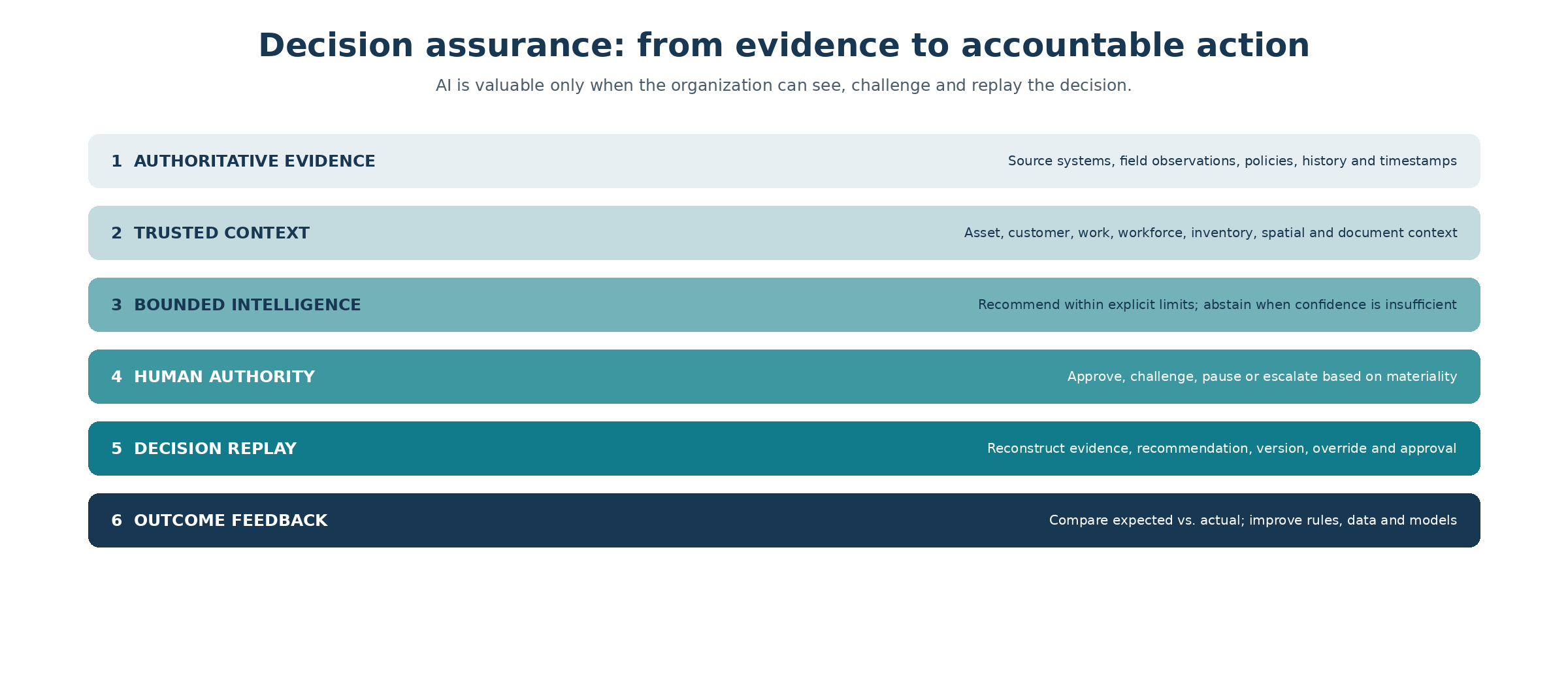
Figure 3. Decision assurance: evidence, context, bounded intelligence and human authority form the control spine.
6. Prove One Connected Workflow Before Scaling
I would avoid beginning with an enterprise-wide AI program. A better starting point is one high-value, bounded workflow where the operational problem and expected outcome are clear.
A strong first candidate is cross-system work readiness. Connect the request or condition signal with asset and location context, criticality and recent failure history, job plans and approved procedures, skills and qualifications, parts/tools/permits, and operating or customer constraints.
AI can then identify missing or conflicting prerequisites and propose a work package for planner review. The proof should not be judged only by model performance or user enthusiasm.
Measure operational results such as planning effort, work-package completeness, field exceptions, repeat work, data quality, schedule effectiveness and user confidence. Once the complete workflow is proven, the integration, data, security and governance patterns can be reused for other work types and locations.
7. Measure Reliability Outcomes, Not AI Activity
One of the biggest risks in AI-enabled transformation is measuring usage instead of value. The number of copilot interactions or generated summaries can indicate adoption, but it does not confirm that assets are more reliable or work is being executed more effectively.
| Outcome area | Measures I would watch |
|---|
| Reliability & asset performance | Repeat failures • asset availability • intervention effectiveness • restoration performance • risk exposure |
| Planning & work readiness | Planning cycle time • work-package completeness • backlog quality • material availability • emergency work |
| Field execution | First-time resolution • schedule adherence • travel/waiting • rework • safety observations • closeout quality |
| Information quality | Asset-data completeness • failure-code quality • update timeliness • source-system agreement • field evidence completeness |
| AI assurance | Recommendation acceptance • human modification/rejection • escalation/abstention • unsupported responses • override reasons • decision replay |
Benefits should be measured against the organization’s own baseline. Universal improvement percentages create unrealistic expectations because asset condition, workforce capability, process maturity and data quality differ across organizations.
8. A Practical Leadership Agenda
My approach can be reduced to five actions:
- Choose the operating-model anchor before selecting the technology.
- Design the full journey from operational signal to completed work and reliability learning.
- Treat asset, work, inventory, workforce, spatial and document information as governed operational products.
- Introduce AI around bounded decisions with clear evidence, limits and human authority.
- Scale only after a connected workflow demonstrates measurable operational value and acceptable control.
Technology will continue to evolve. Scheduling engines, copilots, agents and optimization services will become more capable. But technology alone will not correct unclear ownership, fragmented asset information or weak work-management discipline.
The organizations that gain the greatest value will be those that combine intelligence with accountable execution.
Closing Perspective
Field service should no longer be viewed as the final step in a maintenance process. It should be viewed as a continuous reliability learning system.
Every work package should arrive with better context.
Every schedule should reflect real operational constraints.
Every technician should receive trusted and usable information.
Every completed job should strengthen the asset record.
Every intervention should make the next decision better.
The competitive advantage will not come from applying AI to the largest number of field tasks. It will come from building a field operating model that knows when to recommend, when to stop, who remains accountable and how field evidence improves reliability over time.
References
[1] ISO. ISO 55000:2024, Asset management — Vocabulary, overview and principles. 2024.
[2] IBM. Field Service Management software for asset-intensive operations with IBM Maximo. Accessed August 2026.
[3] SAP. SAP Field Service and Asset Management — AI Functionalities and product documentation. Accessed August 2026.
[4] ServiceNow. Field Service Management product overview and AI-enabled field operations. Accessed August 2026.
[5] PTC. ServiceMax AI and Field Service Management product information. Accessed August 2026.
[6] Microsoft. Dynamics 365 Field Service — Copilot features and field-service documentation. Updated July 2026.
[7] Oracle. Oracle Fusion Field Service — AI-powered service features. Accessed August 2026.
[8] Salesforce. Salesforce Field Service product and AI capabilities.
[9] NIST. Artificial Intelligence Risk Management Framework (AI RMF 1.0). 2023.
[10] NIST. Artificial Intelligence Risk Management Framework: Generative Artificial Intelligence Profile. 2024; updated 2026.