When used oil analysis and/or Direct Reading Ferrographs indicate abnormal wear, Analytical Ferrography is an excellent test to identify the type of wear occurring and the source of wear.
Someone comes in to your facility with an infrared camera to make measurements through an IR window. How do you know the camera will work with your Infrared window?
Detecting when the brushes are off the magnetic neutral axis can be difficult, especially if the motor is inaccessible during operations. Using voltage analysis in the time domain makes the job
Laser Shaft Alignment: Repeatability and Accuracy Issues
A 1 hour 17 minute Web Workshop recording playback by Alan Luedeking, LUDECA, INC.
This presentation is an in-depth treatment of the subject of repeatability and accuracy when laser aligning directly coupled rotating machines. The presenter will discuss how to troubleshoot your readings and will then take your questions concerning these topics.
• Repeatability, Accuracy, Reproducibility and Resolution • Response to corrections • Diagnosing and correcting problems with Standard Deviation
A weekly collection of recommended articles and videos to boost your reliability journey. Right in your inbox
The imagery (IR) from aerial infrared thermal surveys of facilities, complexes, campuses, military bases and cities can be used for many purposes. Systems like supply steam and condensate return lines, hot water lines, chilled water lines, supply water mains, distribution piping, storm water drains and sewer lines can be monitored by looking at surface temperatures/patterns.
Condition monitoring is a process of using a technology to detect changes in machine health over time. The frequency with which one takes measurements will depend on the machine, its current
A 44 minute Recorded Webinar Playback on Demand by Alan Luedeking, LUDECA Inc.
This presentation is an in-depth treatment of the subject of soft foot, or machine frame distortion, in directly coupled rotating machines. The presenter will cover how to measure soft foot with different methods and discuss the pros and cons of each. He will also discuss how to diagnose and correct soft foot conditions, and will then take your questions concerning these topics.
Watch this tutorial to learn:
What is soft foot?
What types of soft foot are there and why is this important?
How do I measure soft foot correctly?
How do I diagnose the soft foot condition I measured?
A polarization index (PI) test with an index value of greater than 8 may be an indication of heat or age related insulation embrittlement. IEEE-43 suggests for a PI index value greater than 8 to
Lubricant Safety While a majority of lubricants (mineral oils) used in a production plant are presently derived from hydrocarbons or synthesized hydrocarbons, the developing trend to increase
A 5:42 minute iPresentation Tutorial by Kristopher Sonne, Predict Inc.
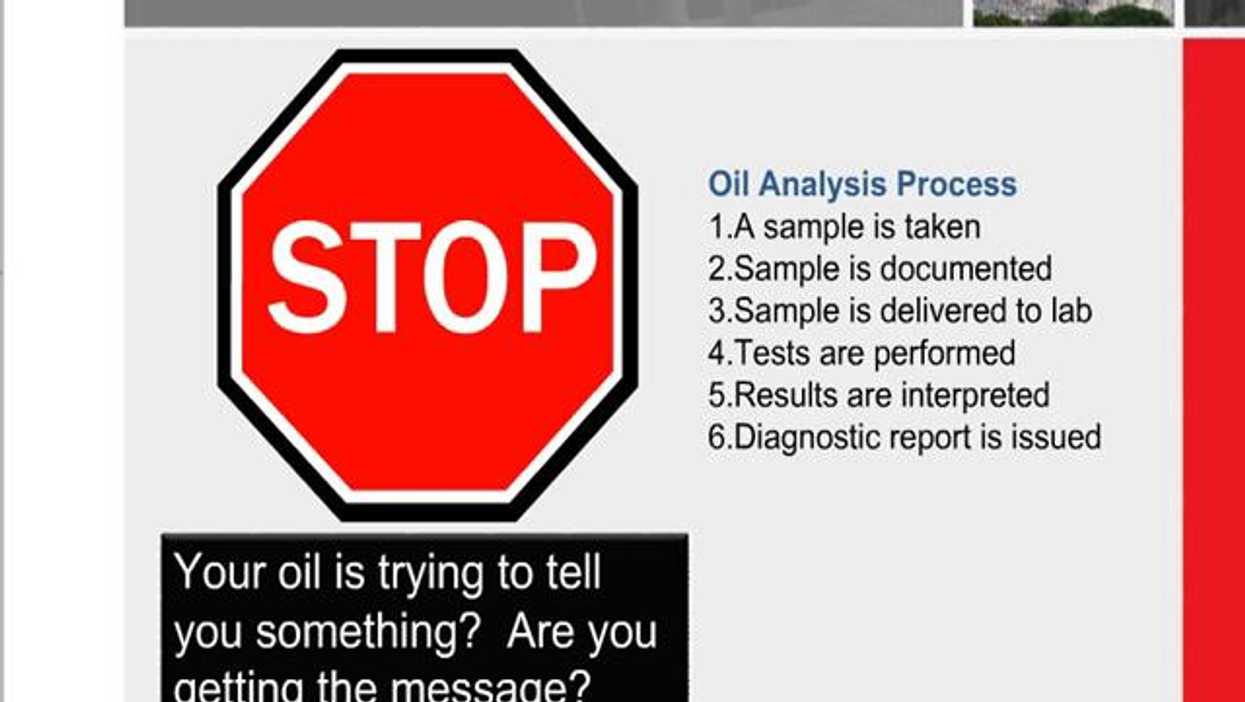
Many organizations throughout the world have implemented oil analysis programs to better manage their equipment and lubricant assets. To receive success in your oil analysis program requires a dedicated commitment to truly understand the equipment design, the lubricant, the operating environment and the relationship between the test data results and the actions to be performed. This iPresentation will provide an overview on implementing an oil analysis program.
Often, maintenance departments invest in good quality Bolts and Nuts (Grade 8), but neglect to do the same with flat washers. The importance of a good washer cannot be overstated. If you use
A 53 minute Recorded Playback On-Demand Webinar by Tim Nelson, Technical Service & Support, Insight Services
Companies can receive exceptional payback from setting up an oil analysis program. However, without proper vigilance the program can fail miserably or never get the traction to deliver the proper payback. With 20 years of experience in helping clients set up and manage lube oil programs Insight presents its top 6 reasons why a program fails. Focus on avoiding theses pitfalls and chances are you are on your way to a world class program.